Screen-free entertainment for kids
Last year, my wife saw a fairly new company tackling this problem in a fairly unique way: Fabli makes a tablet with physical controls that can be used for games, stories, interactive stories, and more. I’m sure everyone has seen some form of news about how screens and tablets can be quite bad for early development, especially at young ages, yet they have so much potential for education. I’ve found that this form of entertainment is a good balance for games amongst kids: No screens, physical controls, and interactive content instead of being passive. Additionally, as an avid audiobook listener, I’m hoping having a curated set of appropriate stories for them will kickstart this passion within them.
After doing a lot of research on the screen-free tablets, I’ve found a decent list of options that are worth considering, although none of them are quite perfect.
The contenders
After learning much on this market, here are some of the options I’ve found. Many of them target only a specific niche, such as audio or games, with some very distinct hardware options and usage requirements.
Yoto
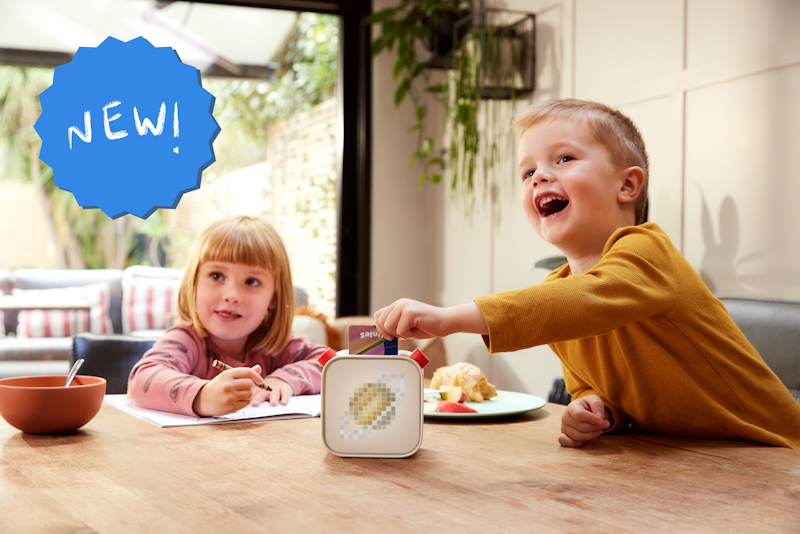
This seems to be the most popular one: It uses physical cards the kids can insert into the player to launch stories. The cards can be purchased as blank where the user can record their own content, or as stories which are ready to play. You can listen to stories without cards by using your yoto library which can be filled by subscribing to the “Yoto Club” subscription or from the online yoto space, which seems to contain user-generated content, podcasts and public domain audio. Quick note: The Yoto Club subscription does function a bit like Audible: There are three tiers of subscription, providing either only access to the internal catalog, or additionally with 1 or 2 credits per month for the user to purchase specific books.
The stories do seem to support some interactivity, although I couldn’t see if it uses the physical buttons to navigate choices or if the user had to manually navigate to the specified chapter like paper books. It has gone through multiple hardware revisions and does have multiple models, namely the regular and the “mini” portable version.
Overall, to use exclusively audio content, this seems like the best option for both free and paid content, I love the physical cards aspect of it, its main downside is the lack of capabilities for anything other than audio.
Lunii
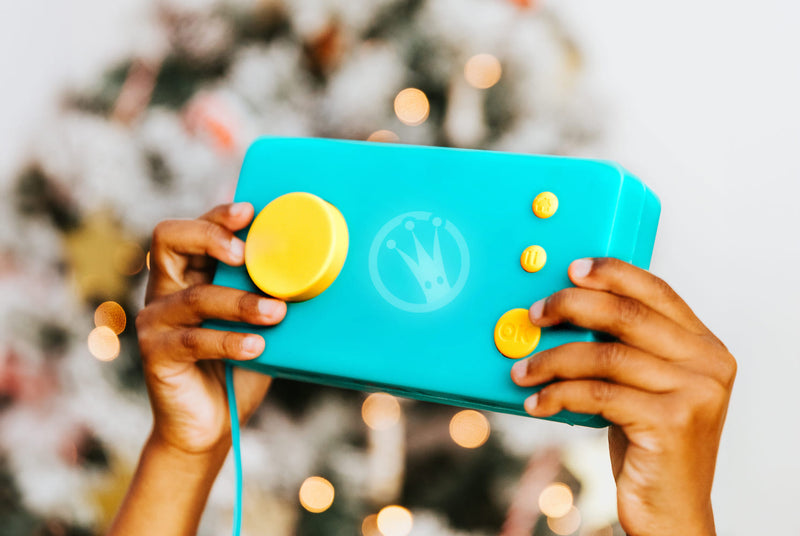
Lunii is another audio-focused hardware player: Its marketing seems to focus on interactive audio content, having first-class support for “Choose your own adventure” books with its dedicated knob and buttons. It does support making your own stories, although for some reason the site infers that there is a 30 minute limit: “up to 30 min of recorded stories”. It is unclear if this is the limit for per story, or the total available limit for all manual stories: I’m hoping it’s the former.
Tonies
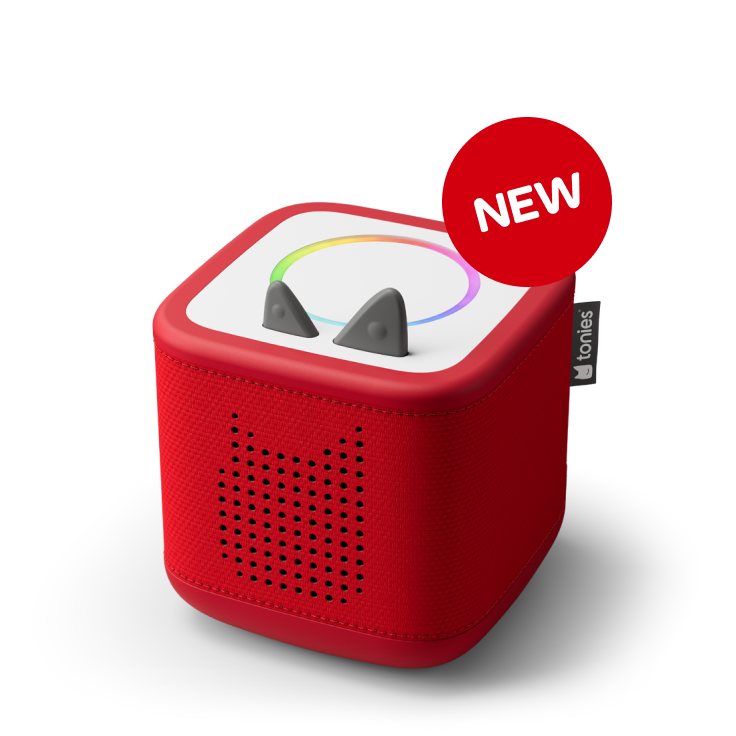
The Toniebox is an audiobox player with physical figurines you can use to start audio content, and a ToniePlay extension you can use to add a knob and button on top for select games.
Each game and story uses a distinct “Tonie” that must be bought separately, you can also purchase a blank figurine to record your own audio, up to 90 minutes per figurine.
Overall, this seems very similar to the Yoto players, but using figurines instead of NFC cards, and with the top play addition.
I’m not a fan of how each individual game and story is a standalone cumbersome figurine, but I can enjoy the added physical aspect of them.
Fabli
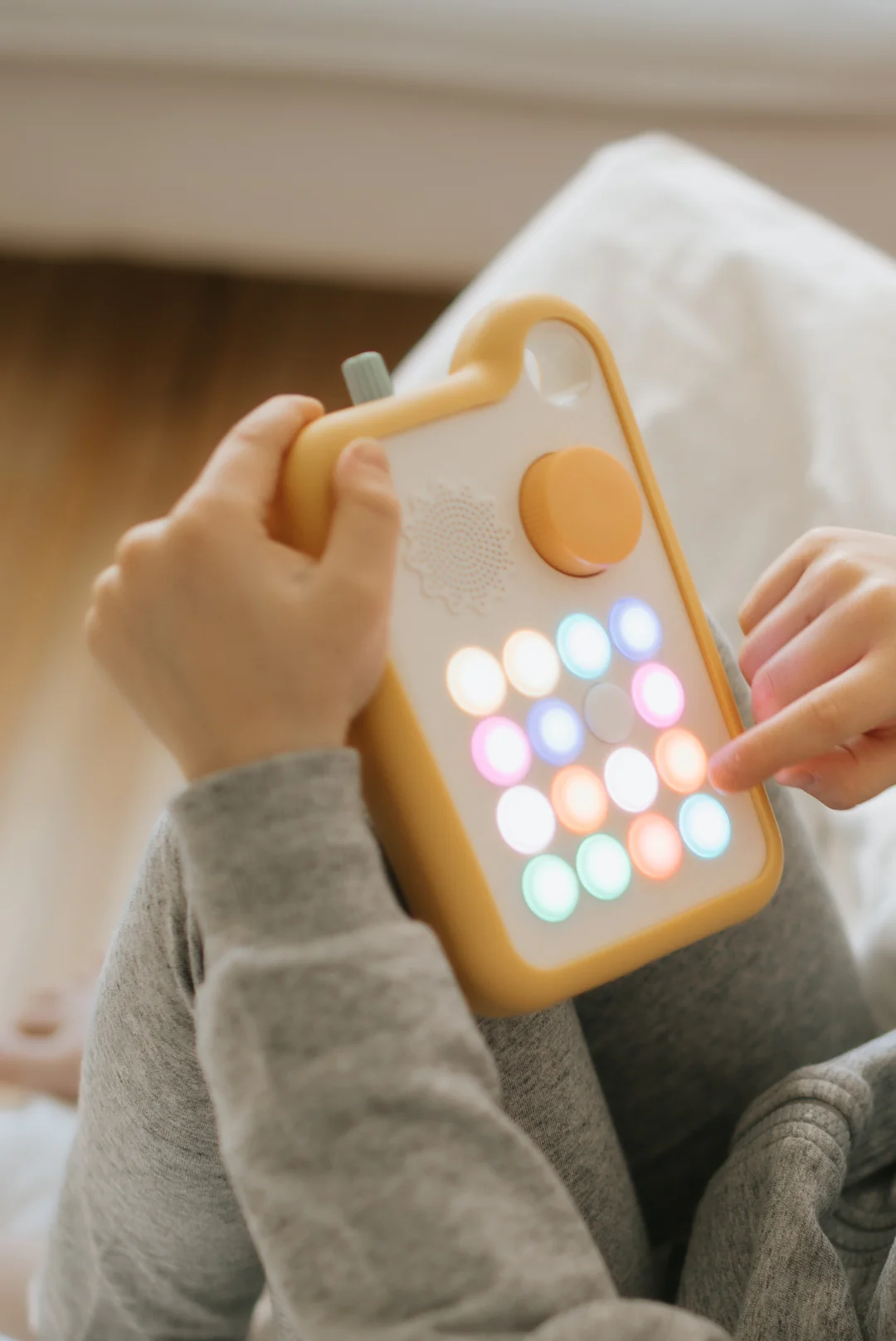
The Fabli tablet is fairly new and mostly localized in the province of Quebec: It has what I consider the most promising hardware, a 4x4 grid of rgb buttons alongside a clickable knob, and an accelerometer to detect tilt, shake and other physical gestures, on top of the usual headphone jack and volume controls. This hardware provides users with way more options for controls, making custom made stories a lot more interactive, and being able to play games and music.
It has 4 content categories:
- Audio: Audiobooks and songs
- Interactive audio, aka. audio that can leverage the hardware. These are “Choose your own adventure” type stories, where your options are highlighted by the physical buttons, and stories where you must interact with the tablet to proceed, such as tilting it to drive. It also includes some interactive music, and other unique experiences like meditation.
- Games: Regular games, such as memory, and educative games, such as midi player to learn songs.
I particularly like the explicit button to disable wifi and bluetooth, as well as overall hardware capabilities of the tablet, although as a thinkerer I wish it had an SDK or a way for users to build custom apps, especially with each game, story and other app costing a couple of dollars.
Boppo
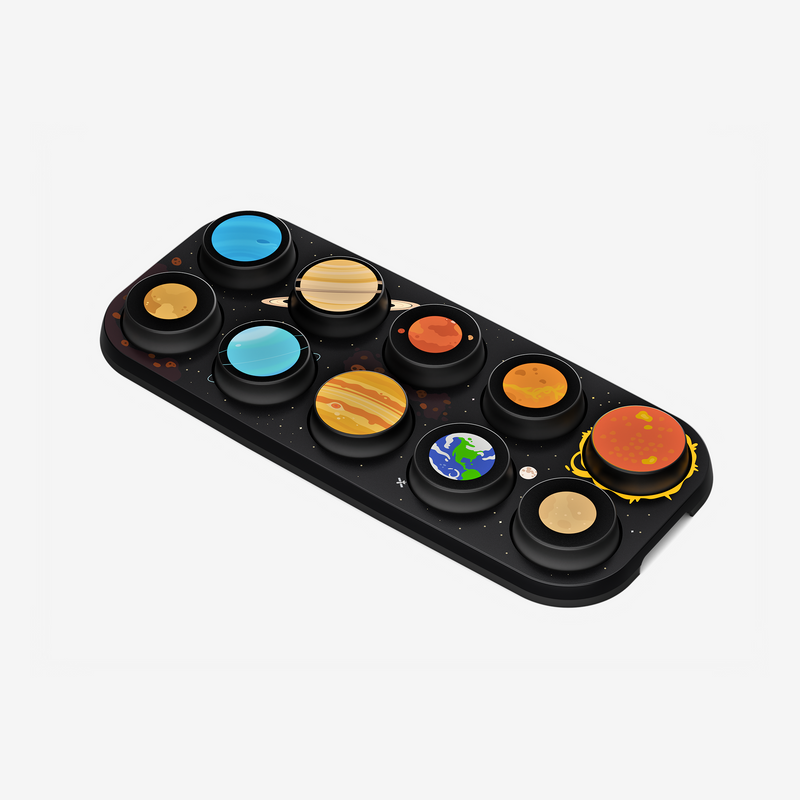
The boppo is another different take on this hardware: It also has 10 physical buttons in a 2x5 grid.
Each button can launch activities, and then be used as controls for this activity.
You can also purchase add-on “toppos”, a $20 skin for the Boppo which adds 10 activities to do, like a DLC.
Excluding Toppos, it seems to otherwise be fully free once you purchase the hardware: all of the content is immediately available instead of having to purchase it individually.
This is a double-edged sword as there is also not as much content as the other platforms, especially on the audio side, but it does plan on releasing a developer SDK and maybe even being open-source, which hopefully will generate more third-party apps and options for additional content.
It seems like currently, you can only play audio from the device library, but a comment on github from the developer does mention that uploading arbitrary mp3 should be coming this month:
To start we have the upload a list of mp3 files into a book coming in the next release sometime this month.
If you wish to use your own audio content and to leverage more of the physical capabilities of these devices, it is a very promising candidate, although it seems to be on the early stages of the product. The lack of online store also makes it harder for users to consume more content, and the lack of SDK at this time makes it less hackable than other educative projects.
Playdate
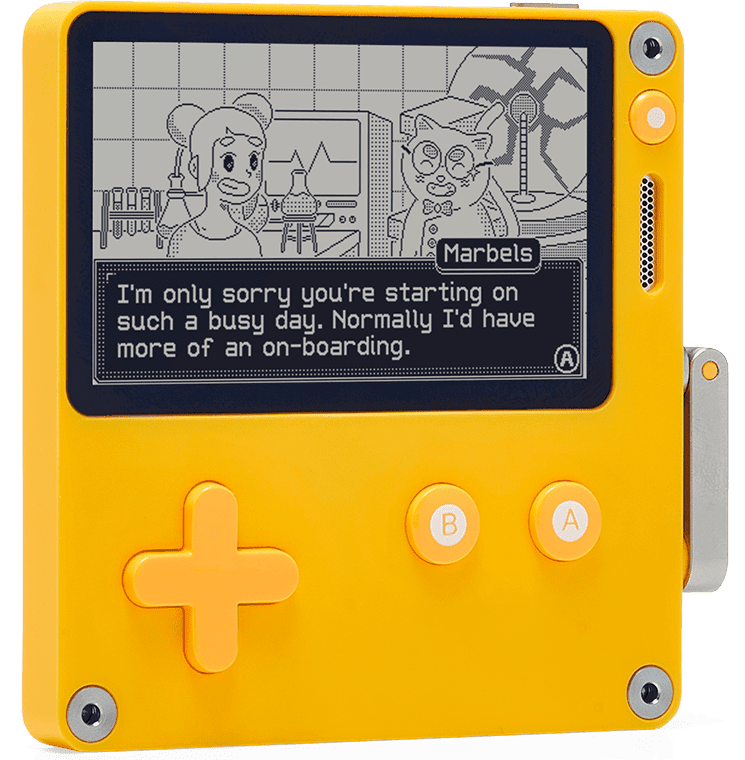
This one has a very different scope from the others, but I figured I would include it anyway as another alternative for playing games. The playdate is more akin to a modern light-weight gameboy. It uses a black-and-white screen, and has a crank as a unique physical aspect the games can leverage. It is hackable, and can be connected to the internet, but remains a great little toy I’ve been following for years.
While there are modern handheld consoles, the playdate is the one that feels the most appropriate for a younger audience.
Comparison
| Yoto | Lunii | Tonies | Fabli | Boppo | Playdate | |
|---|---|---|---|---|---|---|
| Type | Audio | Audio | Audio | Audio, Interactive, Games | Games | Games |
| Controls | Physical cards | Knob + Buttons | NFC cards + Top module button | 4x4 RGB buttons, Clickable knob, Accelerometer | 2x5 Buttons (10 total) | D-pad, Crank, A/B buttons |
| Battery | 16h / 14h (mini) | 8h | 10h | 8h | 3-7h | 8h |
| Your own audio | Yes (blank cards, yoto.space) | Yes (up to 30 min) | Yes (Blank “tonie”) | Yes | Yes | |
| Hackable | No | No | No | No | SDK planned | Yes |
| Price (USD) | $88 (reg) / $64 (mini) | $80 | $117 | $138 | $140 | $229 |
| Content price | Yoto Club subscription, yoto.space, or paid | Paid | Paid | Paid | All Free | Paid |
Overall: I aim towards Yoto for primarily audio content, Fabli for physical interaction and audio, and Boppo for an education tool to hack and augment, once it releases an SDK.
Lunii and Tonies are too similar to the Yoto without having such a wide ecosystem of content, and Fabli is different enough to justify the higher price.
One thing I’ve been surprised by is the price of audiobooks for kids: As an Audible subscriber, I’m used to getting pretty long books for roughly $10’s worth of a credit.
On all of these platforms, books are rarely above 1h and typically between the $10-$20 price point, the same for apps and games on the platforms that do support it: That can quickly become expensive and limits the amount of content they can consume.
Thankfully, most of them let you record your own content or import books you own, such as public domain audiobooks.